Removing Calcium and Hard Water Buildup from Pool Decks
Why calcium and hard-water deposits form on Las Vegas pool decks, how pros remove them safely, and how to slow buildup returning.
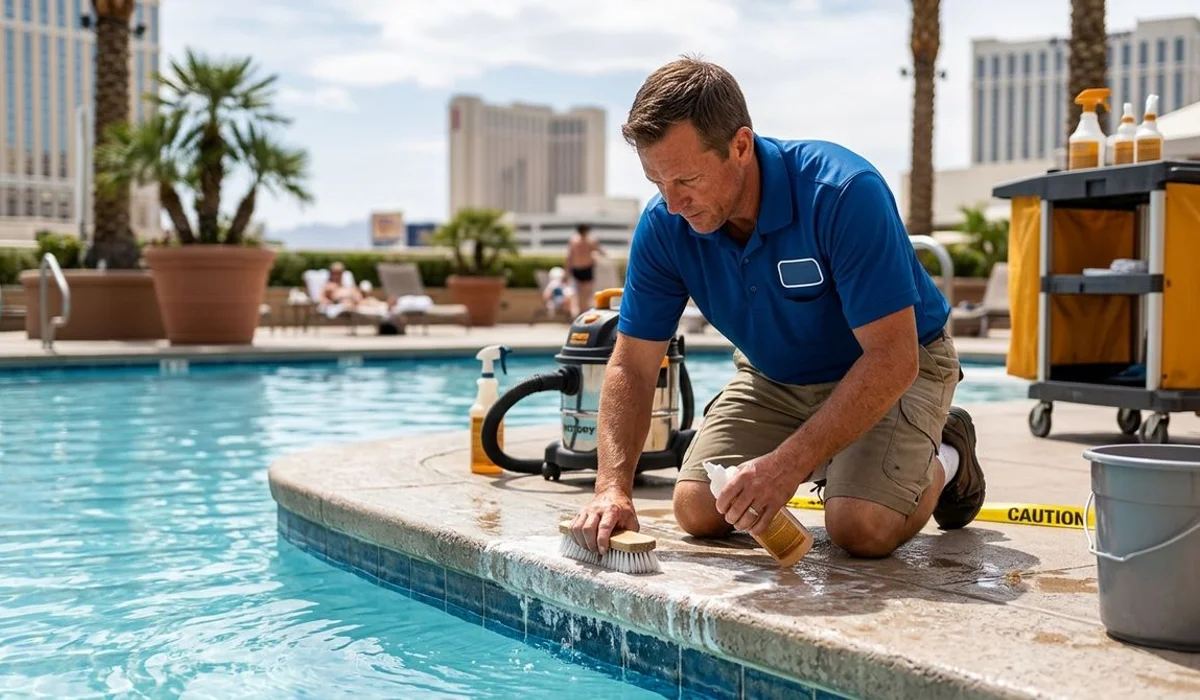
We see this exact issue every single week at commercial properties dealing with a chalky calcium buildup pool deck across Clark County.
Here at Pressure Washer Las Vegas, our company is built on setting a new standard for exterior cleaning and property maintenance. Las Vegas tap water comes out of the pipe loaded with 250 to 300 parts per million of calcium hardness.
Every time you refill an evaporating pool, that mineral concentration spikes.
This guide breaks down exactly why these deposits form and outlines the safest methods to remove calcium concrete stains and keep your community spaces looking pristine.
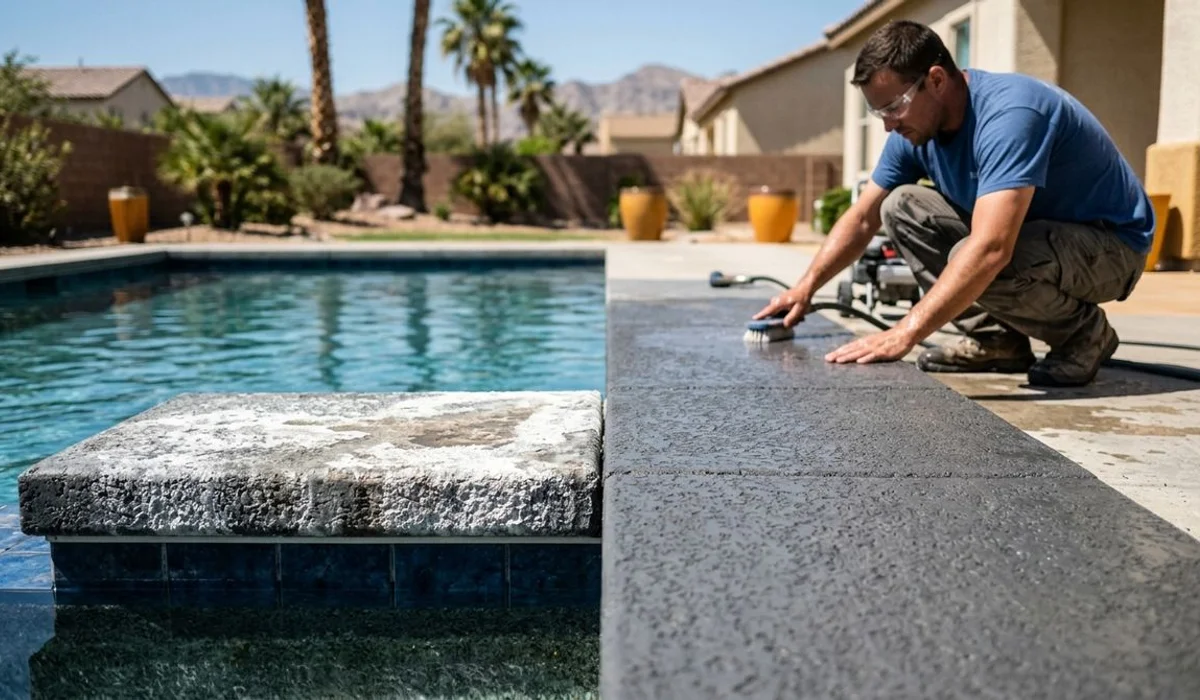
Why calcium forms in Las Vegas water
The primary reason you see hard water pool deck stains is the high mineral content of the municipal water supply combined with rapid desert evaporation. We regularly measure tap water in Clark County at a staggering 250 to 300 parts per million of calcium hardness right out of the pipe.
This heavy mineral load creates a constant battle for property managers. The intense summer heat evaporates the pure water, but the heavy minerals stay behind and crystallize on your surfaces.
Our technicians see this evaporation cycle play out daily on commercial pool decks. The resulting chalky deposits quickly bond to durable concrete, stucco, and decorative coatings.
Here is exactly how the local climate creates this recurring headache:
- High initial hardness: Source water from Lake Mead is naturally hard.
- Extreme evaporation rates: Desert air pulls pure water out of the pool rapidly.
- Constant refilling: Adding more hard water compounds the mineral concentration.
- Rising LSI levels: The Langelier Saturation Index climbs until the water becomes highly scale-forming.
Understanding these factors is the first step toward effective property maintenance. It dictates how we approach every single cleaning project.
Safe removal method for a calcium buildup pool deck
The safest removal method requires matching specialized chemistry or low-pressure media blasting directly to your specific surface type. We avoid using aggressive high-pressure washing on delicate coatings, as it can easily damage the finish before the calcium breaks loose, which is the central question in pressure washing vs soft washing for delicate pool deck surfaces.
In practice, effective removal comes down to strict considerations. First, the method absolutely has to match the surface.
| Surface Material | Safe Cleaning Method | Important Consideration |
|---|---|---|
| Durable Concrete | High pressure washing | Requires precise nozzle calibration |
| Stucco Walls | Soft washing | Prevents surface gouging |
| Solar Panels | Pure water cleaning | Leaves no mineral spots |
| Stubborn Scaling | Glass bead blasting | Superior to manual pumice stones |
Scheduling and Compliance
Second, the cleaning schedule has to fit the property operations perfectly. We perform overnight work for commercial resorts, daytime work for residential homes, and carefully coordinated hours around residents for HOAs.
Third, the standard has to meet all local rules and regulations. Every application must comply strictly with the EPA, the Southern Nevada Water Authority, and specific city or HOA appearance codes.
When we walk a property in Clark County, those criteria are what we evaluate first. Get the method right and the result lasts.
Get the schedule right and the work disappears quietly into the background. Get the standard right and the property stays fully compliant.
Prevention tips
The most effective prevention tip is to apply a high-quality, penetrating siloxane sealer to your concrete or use a dedicated acrylic coating. Our preferred products like Siloxa-Tek 8500 or Super WB create a clear barrier that stops minerals from bonding deep within porous concrete.
A proactive maintenance routine is your next best defense against stubborn scaling. Managing this buildup early prevents costly restorative work down the line.
To keep your commercial deck looking pristine, implement these practical habits:
- Squeegee standing water: Push puddled splash-out water back into the pool or down nearby drains immediately.
- Manage pool chemistry: Keep calcium hardness strictly balanced between 200 and 400 ppm to lower your LSI.
- Install inline filters: Use water softening attachments on the maintenance hoses used for deck washdowns.
- Reapply sealers regularly: Plan to reseal stamped concrete or pavers every two to three years for maximum protection.
We understand that HOAs face strict budgeting for ongoing preventative measures. Investing in a commercial-grade sealer upfront will drastically reduce your long-term maintenance costs.
Our team routinely helps boards plan these maintenance cycles to ensure surfaces remain safe and attractive year-round.
Bottom Line
If you would like a no-pressure walkthrough to address a calcium buildup pool deck, our team can quote your specific property and recommend the right method and frequency. Proper calcium management protects your property value and keeps your residents safe from slippery, degraded surfaces.
We provide transparent assessments customized to your exact facility needs. See our parent service page for full details on the work involved, or request a free quote to get same-day pricing across Las Vegas, North Las Vegas, Henderson, and Summerlin.
As a local standard, we back every job with a solid money-back guarantee. Your complete satisfaction is our priority on every single project.